


Managing stress at work starts with the conditions around the workday: clearer routines, healthier boundaries, recovery cues, and a workspace that helps the body and mind stay steady.
The Common Causes of Workplace Stress
If you're feeling workplace stress, you're not alone. Managing stress while working from home can be even trickier when you are your own manager, motivator, and support system all rolled into one.
Remote work removes some office distractions, but it can create a different set of stressors:
- Delayed communication with managers and teams.
- Constant digital surveillance.
- Home distractions from family, pets, neighbors, or household tasks.
- Blurred lines between work and personal life.
Recognizing these triggers is the first step toward managing them. Symptoms can include sleep difficulty, anxiety, irritability, fatigue, burnout, trouble focusing, and social withdrawal.
Optimize Your Home Workspace
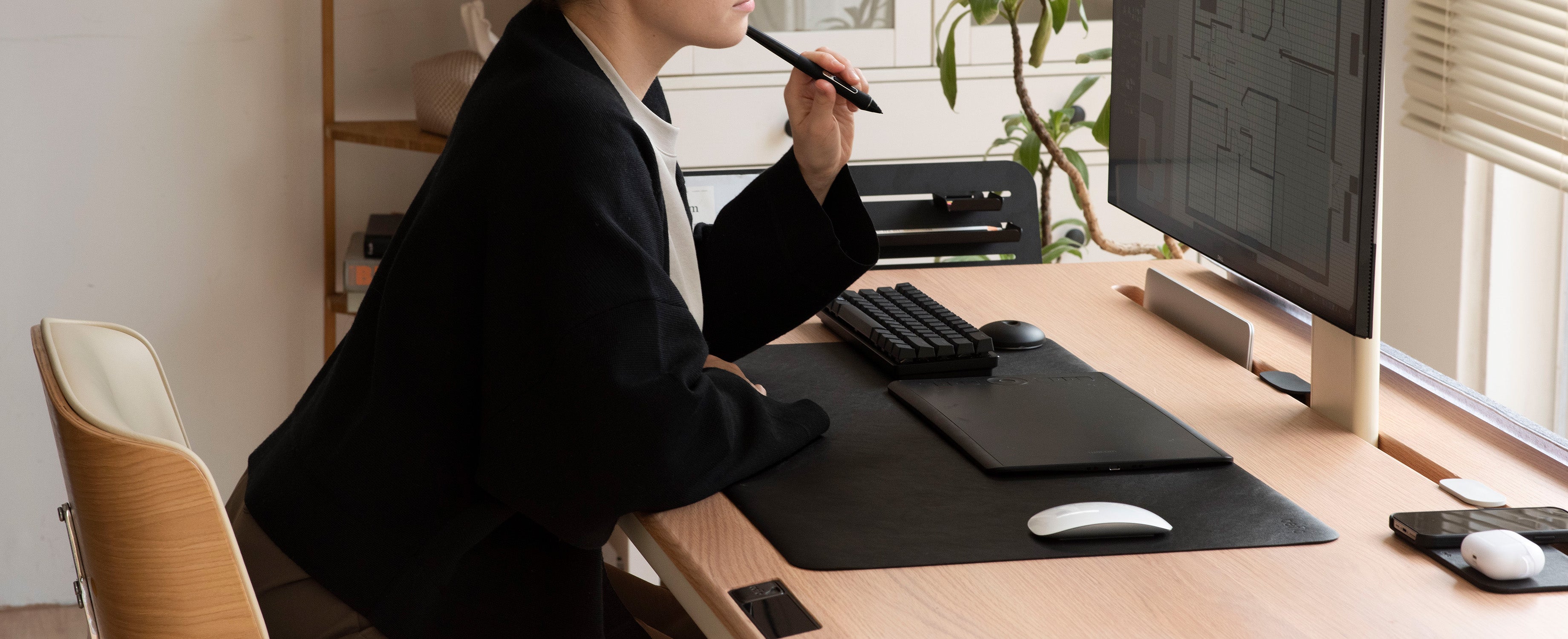
The environment you work in directly shapes mental clarity and performance. An ergonomic setup helps the body stay supported so focus does not have to compete with discomfort.
A sit-stand desk can help you alternate between sitting and standing, improving circulation, energy, and posture variety. Smaller additions such as wireless chargers, desk mats, pegboards, and calming sensory cues can also make the workspace feel easier to use.
Master Your Time Management
Stress often grows when the day has no edges. Structure creates relief because it makes the next action more visible.
- Block time for work, breaks, meals, and exercise.
- Use timers or calendars to protect focus blocks.
- Set start and end times so work does not spread across the entire day.
Good time management is not only about efficiency. It is one of the simplest ways to reduce work-from-home burnout.
Incorporate Relaxation Techniques

Simple daily practices can shift your mood before stress becomes overwhelming.
- Stand up and stretch every hour.
- Practice slow breathing, such as inhaling for five seconds, holding briefly, and exhaling slowly.
- Use calming scents or environmental cues to mark recovery moments.
- Meditate for five to ten minutes during lunch or after a demanding meeting.
These small resets help the body downshift and make stress easier to manage.
Set Realistic Goals and Expectations
You cannot do everything at once, and that is okay. Stress often increases when the standard for a successful day is vague or impossible.
Choose achievable goals, track progress through weekly benchmarks, and give yourself permission to adjust. Flexibility is not a weakness. It is a practical skill for maintaining momentum without burning out.
Maintain a Healthy Lifestyle

Your health directly fuels your performance. Prioritize sleep, hydration, movement, and fresh air. These basics may sound simple, but they shape energy and resilience throughout the workday.
Standing and moving regularly can reduce fatigue, boost circulation, and minimize strain. The goal is not to turn the workday into a workout. The goal is to keep the body from being locked into one position for too long.
Create and Stick to a Routine
Habits create stability, and stability helps manage stress. Carve out a specific home workspace, set regular hours, and create rituals that tell the mind when work begins and ends.
The ritual can be small: tea before opening your laptop, a short walk before deep work, or clearing your desk at the end of the day. The more consistent the routine, the easier it becomes to enter a focused work rhythm.
Managing stress at work takes awareness, recovery, and the right environment. With a better workspace and a few smart habits, you can protect your mental health while still doing meaningful work.
This article is part of beflo's work flow route.
FAQ
Work Stress
What causes stress when working from home?
Common causes include unclear communication, digital overload, home distractions, isolation, and blurred boundaries between work and personal time.
How can I reduce stress during the workday?
Use a clearer routine, take scheduled breaks, move regularly, set realistic goals, and design a workspace that reduces friction and distraction.
Can an ergonomic workspace help with stress?
Yes. A supportive workspace can reduce physical discomfort, improve posture variety, and make it easier to focus without constant body strain.
Why are routines important for stress management?
Routines create predictable cues for starting, pausing, and ending work, which helps reduce decision fatigue and protects recovery time.